BEWARE...SOME DAYS ARE NOT VERY PRETTY. I GET CRABBY LIKE NORMAL PEOPLE DO. AND I DO SPEAK MY MIND.
DO NOT READ IF YOU ARE SENSITIVE TO TRUE, REAL, EVERYDAY FEELINGS LIKE MINE.(But I think you would enjoy it)
DON'T FORGET...FREEDOM OF SPEECH !
'Doctors are still stunned:' How did foreign bacteria leave a Texas girl with brain damage ?
Alison Young
·14 min read
In this article:
For
most of the past six weeks, 4-year-old Lylah Baker has been struggling
to survive an infection that doctors at Children’s Medical Center Dallas
couldn’t beat back. It started out like a typical stomach bug, but
within days tore through her body and into her brain.
Lylah’s family told me that doctors thought she had a rare autoimmune disorder
that can be triggered by an infection. They put a tube down her throat
to help her breathe. They gave her CT and MRI scans, and hooked her to
machines to filter and replace her blood. They administered steroids and
multiple antibiotics. She still wasn’t getting any better.
“They
were even treating her for rabies, just to be cautious, even though she
had never been bitten,” said Lylah’s aunt, Ashley Kennon, who is a
nurse.
- ADVERTISEMENT -
Eventually
a test found an organism growing in Lylah’s blood that initially eluded
identification. It was only after a neurosurgeon took a small sample
from Lylah’s brain that the hospital was able to confirm this curly
haired little girl from a small Texas town had been infected with deadly
foreign bacteria that aren’t supposed to be sickening people in the
United States.
“I think the doctors are still stunned. Nobody expected this,” Kennon told me.
Ashley Kennon visits with her niece, Lylah Baker, who continues to recover from melioidosis, caused by a rare bacteria.
Last week the Centers for Disease Control and Prevention sent an advisory to health professionals
across the country warning that three people who live nowhere near each
other – one each in Minnesota, Kansas and Texas – have been seriously
sickened since March from infections with a potentially deadly type of
bacteria called Burkholderia pseudomallei. It is supposed to be found
only in tropical climates, primarily in Southeast Asia and northern
Australia, where it infects humans and animals through direct contact
with contaminated soil and water. That’s where it lives and grows.
“These three cases are unusual because no recent travel outside the United States has been identified,” the CDC said in its advisory.
Adding to the mystery, the agency said that genomic tests on bacteria
that infected each of these very different people suggests a common
source of exposure, “such as an imported product or animal.”
I’ve
reported on medical mysteries like this for years, including tracking
the very bacteria that sickened Lylah, and here’s what I’ve learned:
Investigating the source of deadly infectious diseases in an
increasingly interconnected world is vitally important because the lives
of real people are at stake.
With human beings jetting across the
globe, encroaching on wild habitats and trading in international
wildlife and common household products, emerging pathogens can quickly
move between continents and find their way to our doorsteps. The politicking and foot dragging that has hamstrung the search for the origin of COVID-19 is not how these investigations are supposed to go.
Knowing
where a pathogen came from is critical in preventing future outbreaks –
and saving people from the kind of suffering that Lylah and her family
are going through.
'Risk of exposure in the United States is unknown but is believed to be low'
Lylah,
the only child among the three cases in CDC’s alert about the
Burkholderia pseudomallei outbreak, has brain damage from her infection,
her aunt told me.
“She’s lucky to be alive,” said Kennon, who is
serving as a spokesperson for Lylah’s parents, Josy and Dustin Baker,
who have spent day and night with her at the hospital.
Lylah
Baker and her parents, Josy and Dustin Baker, who have spent day and
night with her at the hospital as she battles melioidosis.
“The
brain damage she has from this is pretty extensive,” Kennon said. “This
is a little girl, 4 years old, who was walking and talking and so
excited for preschool in the fall, who now can’t speak and can’t hold
her head up, can’t walk. It’s kind of like starting over.”
Investigators
from the CDC and three state health departments are in the early stages
of trying to figure out how Burkholderia pseudomallei bacteria that
aren’t native to the United States could have sickened three people who
currently seem to have no connection to each other.
“At this time, the risk of exposure in the United States is unknown but is believed to be low,” the agency said in a statement.
The bacteria cause a disease called melioidosis
that is difficult to diagnose because of wide-ranging and nonspecific
symptoms that can appear days – or even years – after exposure. And it’s
deadly: killing 10% to 50% of those who become infected.
Few
details have been released by health officials about the other two
people, both adults, who were infected. According to the health alert,
one is male, the other is female. The first case to be identified was in
March and that person died. The other adult, like Lylah, became ill in
May and has been discharged from an unidentified hospital into a
transitional care unit.
Their initial symptoms ranged from
coughing and shortness of breath to fatigue, nausea and vomiting; there
were rashes and fevers that came and went, the CDC said. The patients
were later diagnosed with infectious encephalitis, an inflammation of
the brain. The person who died 10 days after being hospitalized had
preexisting health issues that put them at increased risk for
melioidosis, including chronic obstructive pulmonary disease and
cirrhosis.
This bacterium causes the illness melioidosis in humans.
Lylah’s
doctors at Children’s Medical Center Dallas were unavailable to talk
about her case, a spokesperson said, but with the family’s permission
confirmed key details of her medical history. State health department
officials in Texas and Kansas, who are involved in the investigations,
have not responded to interview requests and questions since July 1.
In
Minnesota, the infected person is an adult with underlying health
conditions, said Doug Schultz, a spokesperson for the Minnesota
Department of Health. The department learned about the person’s
infection when a clinical lab sent a bacterial sample from the person to
the state public health laboratory for confirmation. The person’s
infection was then linked to the other cases when the CDC ran whole
genome sequencing on the bacteria, said Schultz, who said he couldn’t
provide further details.
“We are just beginning our
investigation,” Schultz said in an email. “We are conducting a thorough
investigation into medical history, what household products the case
used, their hobbies, and foods consumed. This will be compared to other
states to see if there are any commonalities.”
The
CDC said none of the three people had any recent travel history outside
the areas near their homes, “therefore there are no known common links
pertaining to travel inside or outside of the US.”
Investigating household items, soil, a pet fish as possible sources – or not
Lylah,
who had no previous health problems, lives with her parents and
1-year-old sister in the small town of Bells, about 60 miles northeast
of Dallas. She hasn’t traveled much in her lifetime, other than for an
annual family beach vacation to Port Aransas, on the Gulf of Mexico near
Corpus Christi. “I don’t think she’s ever left Texas,” her aunt told
me.
Health investigators visited Lylah’s extended family early
this month to take blood samples from about a dozen of them and ask
about a wide range of items the little girl might have been exposed to.
The investigators have told the family that because Burkholderia
pseudomallei bacteria survive best in a moist environment, they are
“mainly interested in liquid products.”
Among the items they’ve
asked family members to provide samples of for testing: any liquid
vitamins, supplements or medications Lylah might have taken; a wide
range of household cleaning items, including laundry detergent, bathroom
and floor cleaners, deodorizing sprays and dish soap; and personal
cleaning items such as hand soap and sanitizer, hand and body wipes and
mouthwash the child might have used. They’ve also asked about packaged
fruit items, such as juices, fruit cups and applesauce, as well as
wanting to know broadly about any products Lylah may have had contact
with that are believed to have been imported.
Lylah Baker, 4, was treated at Children's Medical Center Dallas for melioidosis, caused by a deadly foreign bacteria.
Investigators
have expressed interest in a pet Betta fish that Lylah got during the
winter and that died in February, Kennon said, and were hoping to
possibly test the aquarium or any items that were in it. Betta, also
called Siamese fighting fish, are a type of tropical freshwater fish
native to Southeast Asia.
Another area they are investigating:
garden soil and plants that might have been imported, Kennon said,
adding that health officials will be testing soil samples from the
places Lylah has been. In the days before she first started feeling ill
on May 24, Lylah had been helping one of her grandmothers plant flowers,
Kennon said, and they are being tested too.
It’s
important to know that none of these items may have anything to do with
the source of Lylah’s infection. That’s why a systematic, in-depth
investigation is so critical.
This early in an investigation the
disease detectives from the CDC and state health departments are casting
a wide net, looking into many possible suspects. Using standardized
lists of products and activities, they’re asking questions of all of the
families in the outbreak, seeking similarities between items the
patients were exposed to. And they’re testing dozens of products and
soil samples – as well as family members – to see if they can find the
bacteria.
It’s a painstaking process that takes time.
Not everyone exposed will get sick
Burkholderia
pseudomallei bacteria are not considered to be easily spread from
person to person. In countries where the bacteria are commonly found,
people and animals are usually infected by coming into direct contact
with soil or water where the bacteria are living and growing, such as by
inhaling bacteria-contaminated dust or water droplets, or bacteria
entering through a cut in the skin.
Not everyone who is exposed
will become ill. For those who do, it can then take a day to many years
between when a person is exposed and when they start developing symptoms
of melioidosis, though the CDC says symptoms generally appear within
two to four weeks. Getting an accurate diagnosis can be difficult
because they symptoms are so nonspecific.
According to the CDC, the only places in the United States
where Burkholderia pseudomallei occurs naturally are Puerto Rico and
the U.S. Virgin Islands. While about a dozen cases of melioidosis are
diagnosed in the U.S. each year, these tend to be people who have a
history of living in or traveling to tropical areas where the bacteria
are typically found. So cases of melioidosis are very rare in this
country.
The last time I reported on Burkholderia pseudomallei was because of a lab accident
in late 2014 at the Tulane National Primate Research Center in
Louisiana that raised concerns bacteria may have been released into the
surrounding environment.
The Tulane National Primate Research Center is located on 500-acres in Covington, La.
Researchers
were working inside a secure biosafety level 3 laboratory with multiple
layers of safeguards, yet the bacteria got out of one of the center’s
labs and infected monkeys that had never been used in experiments and
were kept elsewhere on the property. A federal investigation found
that sloppy biosafety practices and workers wearing contaminated
clothing outside the lab were the likely ways the bacteria were tracked
to where the monkeys became infected. Environmental testing after the
safety breach did not find the bacteria outdoors on the lab’s property.
It’s
serious mistakes like these, made by scientists with the best of
intentions at a prestigious facility, that go to why a thorough, independent investigation of all plausible causes of the current COVID-19 pandemic – including the potential for a lab accident – continue to be needed.
This
500-acre research laboratory and primate breeding facility 35 miles
north of New Orleans is among dozens of academic and government labs
across the country that have been conducting experiments with
Burkholderia pseudomallei, research fueled by bioterrorism preparedness
funding and the need to develop tests, treatments and vaccines. Because
Burkholderia pseudomallei poses such a severe risk to public health and
has potential for misuse as a bioweapon it’s on the U.S. government’s Tier 1 “select agent” list of pathogens – which also includes the Ebola virus and the bacteria that cause anthrax and plague.
The
CDC said there is currently no evidence to suggest the three
melioidosis cases are the result of a biological attack. The suspected
source of the infections, based on the CDC’s health alert and the
questions being asked of Lylah’s family, is an imported product or
animal.
“Testing suggests a common source of infection, but that source has not yet been identified,” the CDC said in its statement.
While some scientists suspect
that Burkholderia pseudomallei bacteria may be lurking undetected in
the soil in parts of the southern United States, the CDC apparently
doesn’t think that’s the culprit with the three recent cases. The CDC’s
statement said the agency’s genetic analysis of the bacteria from the
three patients indicates they didn’t get infected from a natural
reservoir of bacteria in North America, because the strains aren’t
similar to those found in the Americas.
The CDC did not answer questions about the name of the strain involved in the outbreak or where that strain is found.
Last year, scientists from the CDC and the Texas Department of State Health Services suggested in a journal article
that it’s possible Burkholderia pseudomallei may be endemic in Texas
and some other warm-weather states. In analyzing the genomes of bacteria
taken from two Texas residents who were separately sickened with
melioidosis – one in 2004 and the other in 2018 – they found intriguing
similarities. And additional similarities were found among the genomes
of bacteria that over the years have sickened other patients who were
residents of North America.
The genetic fingerprints in the
current outbreak investigation involving Lylah and the people in
Minnesota and Kansas appear to be pointing to a source outside the
United States. But where? And how? There are more questions than answers
about how three people’s lives have been devastated in recent months.
'Miracles have been worked'
For
Lylah and her family, the questions aren’t just about how she was
infected. Some of the biggest questions involve what is ahead of them.
“I
think a lot of people, I think they think she’s just recovering in bed,
getting stronger in bed,” her aunt said. “It’s the brain damage she’s
having to recover from. It’s starting all over again and not knowing
what the future is.”
Lylah
Baker suffered brain damage after being infected with deadly foreign
bacteria that aren’t supposed to be sickening people in the United
States.
On Thursday, Lylah moved to a
specialty children’s rehabilitation hospital in Dallas where her family
hopes she will be able to spend at least the next 30 days, insurance
willing, receiving intensive physical, occupational and speech therapy
to help overcome the lesions on her brain. Her parents will stay there
with Lylah, Kennon said, supporting her through the therapy and also
learning how to care for her when she moves back home.
Lylah’s
mom, Josy, is on unpaid leave from her job at a veterinary clinic,
Kennon said. Her dad, Dustin, is a firefighter paramedic, whose
colleagues in Denison, Texas, have been helping support the family by
taking on his shifts and donating their work. Lylah’s grandparents have
been taking turns caring for her baby sister, Addie. There have been
community fundraisers at local restaurants, Venmo donations and a GoFundMe page.
The support the family has received has been amazing, Kennon said.
“It’s
just the fear of the unknown,” she said. “The miracles have been
worked. She’s pretty much survived the unimaginable. She’s definitely
beaten the odds, that’s for sure. So everything she does is a huge
success for us.”
Alison Young
is an investigative reporter in Washington, D.C. She is also the Curtis
B. Hurley Chair in Public Affairs Reporting at the Missouri School of
Journalism. During 2009-19, she was a reporter and member of USA TODAY’s
national investigative team. Follow her on Twitter: @alisonannyoung
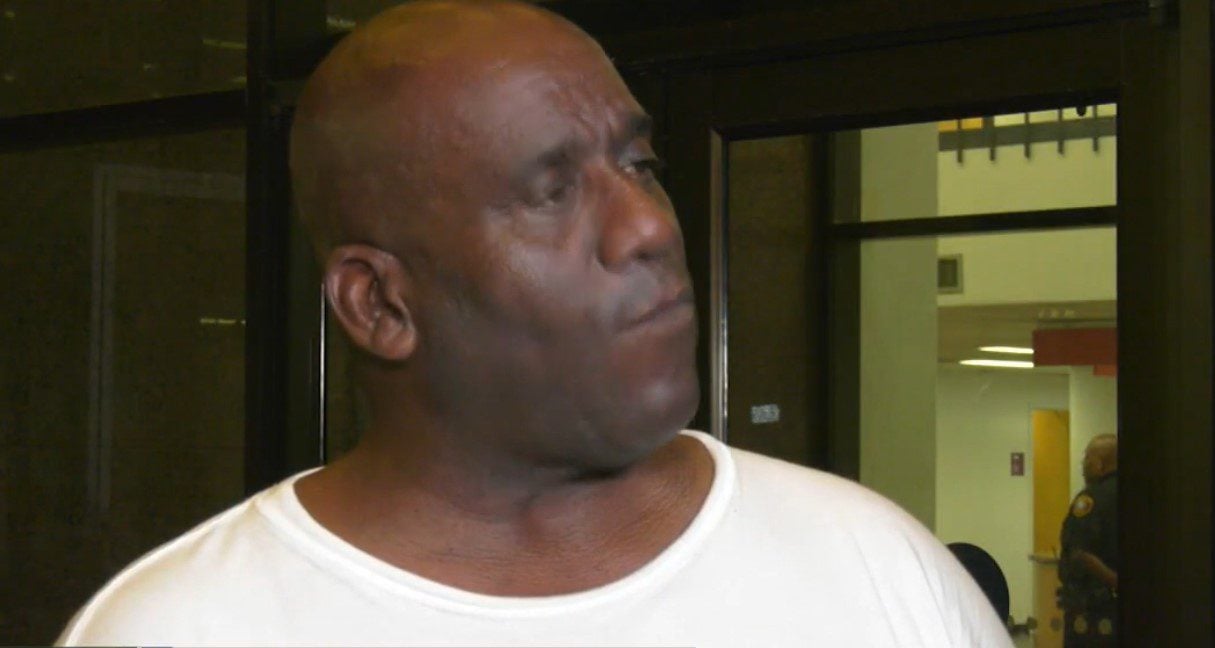
He gained national attention through his tenacity at a local polling
place, refusing to leave even after others might have: Hervis Rogers was
the last man to vote at his Texas Southern University polling place
early Wednesday morning, and possibly the last person to cast a ballot
in the State of Texas when he did so around 1 a.m.
Rogers, who works two jobs, arrived at the polls just before 7 p.m.,
and his roughly six-hour wait was tough, he said. But that didn’t stop
him.
“It is insane, but it’s worth it,” Rogers said while
waiting in line. “I mean, I wouldn’t feel right if I didn’t vote. I feel
like it’s— I voice my opinion, but it don’t feel right if I don’t vote.
So I said, ‘I’m going to take a stand and vote. It might make a
difference.’”
When he finally got to TSU, Rogers said he had already been to two
other packed locations nearby. He had work at 6 a.m. Wednesday, and
thought about just turning around to go home, but something came over
him, he said, and he decided to stick it out. More than five hours
later, he still sat in line, patiently waiting to cast a ballot for Joe
Biden.
Now, we have this.
Authorities are saying Hervis Rogers was not eligible to vote due to the fact he was on parole.
Back in 1995, Rogers was arrested and sentenced to 25 years in prison for burglary and intent to commit theft.
A Houston man who received widespread attention after standing six
hours in line to cast a ballot in the 2020 Democratic presidential
primary was in jail Friday on charges that it was illegal for him to
vote at all because he was on parole.
Hervis Rogers became an overnight face of Texas’ battle over voting
access when he emerged from a polling center at a historically Black
college around 1:30 a.m. He was among Houston voters on Super Tuesday
who waited more than an hour — and some for several hours — in mostly
minority, Democratic neighborhoods. Lines in mostly white, Republican
neighborhoods were shorter.
“The way it was set up, it was like it was set up for me to walk
away,” Rogers told reporters in comments carried by multiple news
outlets, including The Associated Press.
He was arrested this week on two counts of illegal
voting, a second-degree felony that carries a possible sentence of two
to 20 years in prison. His bail was set at $100,000.
Liberals attacked Texas AG Paxton for the arrest.
He responded, “I prosecute voter fraud everywhere we find it!”:
A
medical worker prepares to dilute a vial of Pfizer-BioNTech vaccine at a
coronavirus disease vaccination centre in Singapore on 8 Marc, 2021.
(Reuters file photo)
SINGAPORE —The
Ministry of Health (MOH) said on Monday (5 July) that it is
investigating an incident involving a 16-year-old boy who suffered a
cardiac arrest after lifting weights six days into receiving his first
dose of the Pfizer-BioNTech COVID-19 vaccine.
The ministry on
Monday (5 July) said it was alerted to the incident on Saturday by the
Khoo Teck Puat Hospital (KTPH), where he had been treated at its
emergency department following his collapse at home on the same
morning.
The boy was later transferred to the National University
Hospital (NUH) in the evening, where he remains in critical condition
at the intensive care unit.
Prior to his collapse on Saturday, he
was lifting weights at the gym, the MOH said, adding that it
"understands that he trains with very heavy weights which were above his
body weight".
The boy had received his first dose of the Pfizer-BioNTech/Comirnaty vaccine on 27 June.
He
was assessed by trained healthcare personnel to be suitable for
COVID-19 vaccination and was well following a post-vaccination onsite
observation that lasted about 30 minutes, it added.
He was also well for the following five days after vaccination, the MOH noted.
"We
are in contact with the medical team in the NUH who are providing close
medical care for the patient. The preliminary diagnosis of his
condition is an out-of-hospital cardiac arrest. Clinical and laboratory
tests are in progress to understand the underlying cause," said the
ministry.
The ministry added that it will also work with the
hospital's medical team in NUH to determine if the incident might be
linked to the boy's COVID-19 vaccination. This will include a thorough
consideration of whether there was acute severe myocarditis, which is
severe inflammation of the heart muscles affecting the heart function,
as a possible diagnosis.
The expert committee on COVID-19 vaccination will monitor the outcome of the investigation.
New guideline on exercise
"While
most persons with vaccine-related myocarditis observed locally and
internationally have mild symptoms and make an uneventful recovery, it
is possible that the condition may be aggravated by factors or strenuous
activities that may affect the heart," said the expert committee in a
separate statement on Monday.
It added that given the emerging
data on the small risk of myocarditis and pericarditis observed after
vaccination with mRNA COVID-19 vaccines – such as those made by
Pfizer-BioNTech and Moderna – all individuals who have received any dose
of the mRNA vaccines should avoid any exercise or strenuous physical
activity for one week after vaccination.
This applies particularly to adolescents and younger men aged less than 30 years old.
"During
this time, the vaccinated persons should seek medical attention
promptly if they develop chest pain, shortness of breath, or abnormal
heartbeats. All doctors should also be vigilant around such clinical
presentations after vaccination," said the committee.
It also said
that any individual diagnosed with myocarditis after receiving mRNA
COVID-19 vaccine should not receive further such doses.
There have
been 12 reports of myocarditis and pericarditis occurring in
individuals following their vaccinations with mRNA COVID-19 vaccines as
of 30 June, said the expert committee, which cited the Health Sciences
Authority's (HSA) third COVID-19 vaccine safety update released on
Monday.
Five of the cases occurred in adults aged 30 years old and above.
The
remaining seven involved males aged below 30 years old, "higher than
expected for this age group, based on background incidence rates", the
committee noted.
"While most of the cases reported previously had
occurred after dose two of their vaccination, the HSA had also started
to receive reports of some cases that occurred after dose one," it
added.
The expert committee said that after extensive
deliberation, it continues to recommend vaccination with mRNA COVID-19
vaccines for all eligible individuals, including adolescents and younger
men, "as the protective benefits from the mRNA COVID-19 vaccines
continue to outweigh the risks".
"The use of safe and efficacious
COVID-19 vaccines in Singapore is of paramount concern to the expert
committee, and the expert committee will continue to monitor local and
international data to ensure our vaccination recommendations are up to
date based on the latest scientific evidence available," it added.
As
of Saturday, a total of 5.71 million doses of COVID-19 vaccines have
been administered under the national vaccination programme in Singapore.
About 3.55 million individuals have received at least one dose, of whom 2.16 million of them are fully vaccinated.
A corona outbreak among schoolchildren after a party in Tel Aviv
worries the health authorities in Israel . As the TV broadcaster Channel
12 reports, at least 83 young people caught the virus at the
celebration – all of them with the same classmate. The main worrying
thing about the case is the chain of infection that led to the outbreak.
According to the Times of Israel, the young man who distributed the
virus at the party was vaccinated. He, in turn, had become infected from
a relative who had also been vaccinated, and that relative had become
infected from a person who was also vaccinated and who was recently in
London. It is unclear which variant of the coronavirus it is.
Don't make yourself sound stupid by only only listening to ONE side.
READ ALL... then decide.
We have found and researched stories last week that we proved were wrong. How many out there will look stupid in the future for beleiving stories just because some YELLS AND SCREAMS loud?
Fox News Flash top headlines are here. Check out what's clicking on Foxnews.com.
The Lambda variant,
which is believed to have been first detected in Peru about a year ago,
is a new concern to scientists who say mutations could potentially be
resistant to COVID-19 vaccines.
The World Health
Organization said the variant’s mutations could increase its
transmissibility or possibly increase its resistance to "neutralizing
antibodies." The health body called Lambda, or C.37, a "variant of
interest."
"So far we have seen no indication that the lambda variant is more aggressive," Jairo Mendez-Rico, a WHO virologist, told DW.
"It is possible that it may exhibit higher infection rates, but we
don't yet have enough reliable data to compare it to gamma or delta."
He told the German outlet that a SARS-CoV-2 evolves, it may start to become more transmissible, but not as deadly.
Jeff Barrett, director of the Covid-19 Genomics Initiative at the Wellcome Sanger Institute in the UK, told the
Financial Times that a reason it is challenging to "make sense of the
threat from Lambda, using computational and lab data, is that it has
rather an unusual set of mutations, compared with other variants."
The
vaccines most used in Western countries still appear to offer strong
protection against the highly contagious delta variant, first identified
in India and now spreading in more than 90 other countries.
White man who pushed Black neighbor in racist rant arrested
Racial Injustice Neighbor Arrested
Police
escort Edward Cagney Mathews through a crowd of people who had gathered
outside his Mount Laurel, N.J., home, Monday, July 5, 2021. Mathews, a
white man who is being called racist after a video went viral of him
pushing a Black neighbor with his chest and using racist slurs to
address the neighbor and others, was arrested Monday after protesters
gathered at his home for hours. (Tom Gralish/The Philadelphia Inquirer
via AP)
MOUNT
LAUREL, N.J. (AP) — A white man who is seen in video footage pushing a
Black neighbor with his chest and using racist slurs to address the
neighbor and others on Friday has been arrested.
Edward C.
Mathews, 45, was arrested on Monday evening after protesters gathered
outside of his Mount Laurel home for multiple hours.
“Now, what I
did was not acceptable. It’s completely wrong,” Mathews is seen saying
in another video filmed by a protester on Monday before his arrest.
In
the footage showing the confrontation on Friday, Mathews gives his
address several times before finally walking away saying, “Come
(expletive) see me.”
- ADVERTISEMENT -
In
a statement posted online Monday morning, the Mount Laurel police
department said Mathews was charged with harassment and biased
intimidation but was initially issued a summons and was not arrested.
On
Monday evening, prosecutors said at a press conference that they were
bringing new charges against Mathews based on additional video footage,
but did not say what the new charges were. An email to the Burlington
County prosecutor seeking additional information was not immediately
returned.
Police officers stood at the door of Mathews home while
protesters gathered outside on Monday. When police moved to arrest
Mathews around 7:30 p.m., footage posted by a reporter shows protesters
throwing objects towards officers and Mathews as they walk to a police
car and then at the car as it drove away.
Police say they are
investigating other incidents involving Mathews. It was not immediately
clear if Mathews has an attorney to represent him. A working phone
number for Mathews could not immediately be found.
Mount Laurel is located 19 miles (30 kilometers) east of Philadelphia.
Pfizer vaccine less effective against Delta variant, Israeli study finds
Neri Zilber in Tel Aviv
·2 min read
The
BioNTech/Pfizer vaccine is less effective in halting the spread of the
Delta variant than that of previous strains of coronavirus, a study
released by Israel’s health ministry has revealed. Data collected over
the past month suggest the vaccine is 64 per cent effective at halting
infection among those who are fully inoculated, the ministry has found.
Cases have ticked up since Israel lifted all remaining Covid-19
restrictions on June 1, with many experts blaming the highly
transmissible Delta variant.
After COVID-19, 'black fungus' robs some in India of their eyesight
A doctor examines mouth of Bhalabhai Dhulabhai Rathod, who is suffering from Mucormycosis, at a hospital in Ahmedabad
Francis Mascerenhas and Adnan Abidi
·2 min read
By Francis Mascerenhas and Adnan Abidi
(Reuters)
- Saheb Rao Shinde's family thought the worst was over when the
65-year-old recovered from COVID-19 last month at his home in western
India. But a few weeks later, the revenue-stamp vendor lost sight in one
eye.
After a catastrophic second wave of COVID-19 in India since
April which has seen its overall death toll climb to almost 400,000,
thousands who contracted the virus also suffered from a rare fungal
disease called mucormycosis, or "black fungus".
The South Asian
country — which has more than 30.4 million confirmed COVID-19
infections, second only to the United States — has so far reported more
than 40,845 cases of mucormycosis.
Many like Shinde may never be
able to regain their sight after the fungal disease which causes
blackening or discoloration over the nose, blurred or double vision,
chest pain, breathing difficulties and coughing blood.
Related video: Black fungus cases spike in India
Scroll back up to restore default view.
"Father
was fit and healthy, now he doesn't feel like eating ..." said his
daughter, who did not want to be named. "His teeth have also been
removed, it's very sad."
Shinde, from the arid western Indian
region of Marathwada, will resume work after he recovers from this, his
daughter told Reuters in Mumbai.
Reuters spoke to several other sufferers of mucormycosis across India.
Adesh
Kumar, a 39-year-old farmer in the northern state of Uttar Pradesh,
lost sight in his left eye. He had to borrow money to pay for medicine,
secured against some of his land.
India ordered tighter
surveillance of mucormycosis in May as it compounded the challenge for
COVID-19 patients, especially those on steroid therapy and with
diabetes. Experts say an overuse of certain drugs which suppress the
immune system could be causing the surge of the fungal infection.
"We
are seeing a lot of mucormycosis cases post COVID infections, since
COVID itself is known to decrease the immunity," said Charuta Mandke of
the ophthalmology department at Dr R N Cooper Municipal General Hospital
in Mumbai.
(Reporting by Amit Dave in Ahmedabad, Adnan Abidi in
New Delhi and Francis Mascarenhas in Mumbai, Writing by Ankur Banerjee
in Bengaluru; Editing by Emelia Sithole-Matarise)
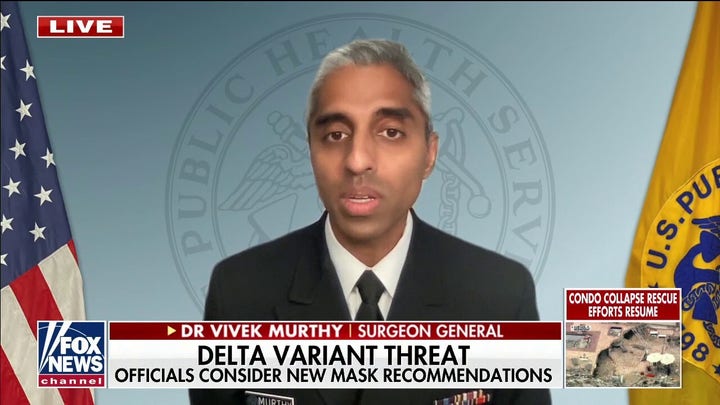
The
World Health Organization’s decision to encourage those who are fully
vaccinated to wear masks as a result of the highly transmissible Delta
variant is "a good idea," according to University of Arizona College of
Medicine-Phoenix’s Dr. Shad Marvasti.
“We don’t want to wait until
after the fact and get caught with this thing already ahead of us when
we know that masks work,” Marvasti told Yahoo Finance Live. “To put this
in context, the Alpha variant, which originated out of the UK, was
about 50% more infectious and transmissible. The Delta variant is 60%
more infectious than that.”
The Delta variant, which was first identified in India, has now spread to more than 80 countries. The Centers for Disease Control and Prevention (CDC) officials warn
it will likely become the dominant strain in the U.S. in a matter of
weeks as infections attributable to the highly contagious variant spread
rapidly nationwide. COVID-19 cases caused by the Delta variant
currently account for about one-fifth of new coronavirus infections in
the U.S., according to the CDC.
PERTH,
AUSTRALIA - JUNE 29: Members of the public are seen wearing face masks
in the CBD during Lockdown on June 29, 2021 in Perth, Australia.
Lockdown restrictions have come into effect across the Perth and Peel
regions for the next four days, following the confirmation of new
community COVID-19 cases linked to the highly contagious Delta variant
of the coronavirus. (Photo by Matt Jelonek/Getty Images)
“The
CDC needs to act quickly, without waiting, to follow the WHO guidelines
and ask everyone to put the masks back on so we can stay open, protect
folks, and keep the economy going,” Marvasti said. “We’re already seeing
preliminary numbers out of Israel where fully vaccinated people are
getting sick.”
Preliminary findings by Israeli health officials
found that about half of adults infected by the Delta variant in the
country were fully vaccinated, the Wall Street Journal reported, and as it stands now, the Delta variant is likely causing about 90% of new infections in Israel.
Outbreaks
of infections largely driven by the Delta variant have prompted
governments from around the world to reimpose coronavirus-related
restrictions. South Africa is imposing at least two weeks of lockdowns while about 10 million Australians are also under lockdown. Here in the U.S., Los Angeles County officials are urging all residents to wear masks in public indoor spaces, regardless of vaccination status.
“We
have gotten into this false sense of security thinking it's okay to
take off masks,” warned Marvasti. “The best thing to do is to start
putting the masks back on to prevent another surge from happening, and
if you’re unvaccinated, now is the time to get vaccinated before this
Delta variant comes for you.”
Seana Smith anchors Yahoo Finance Live’s 3-5 p.m. ET program. Follow her on Twitter @SeanaNSmith